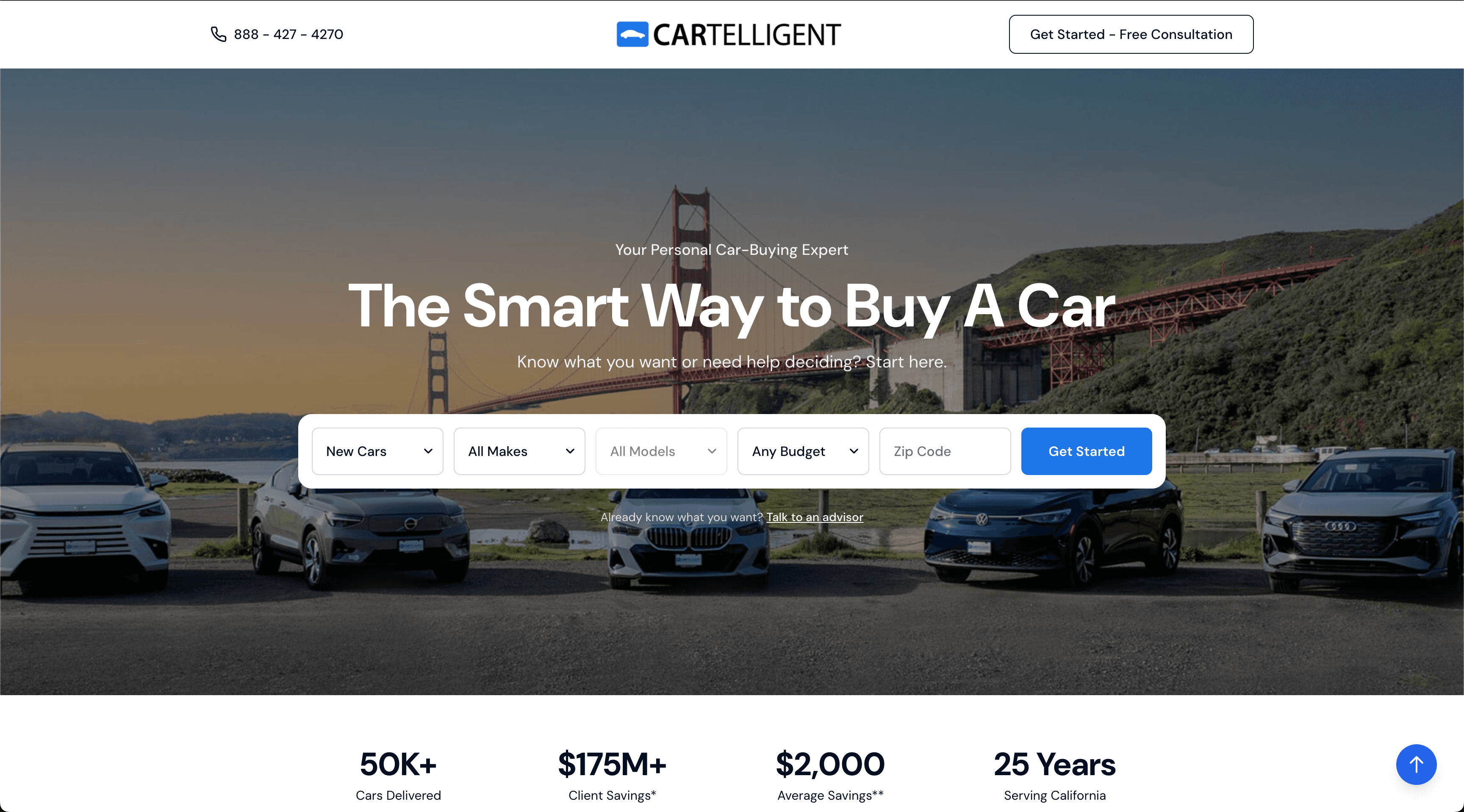
Cartelligent
Landing Page & Conversion Optimization System
Built a modern React-based landing page system with multiple conversion paths and comprehensive analytics tracking, enabling A/B testing against the company's legacy WordPress site and delivering a 2.6x improvement in chatbot conversion rates over traditional form submissions.
ReactViteVercelCloudflare WorkersPostHog AnalyticsSalesforceSupabaseTailwind CSS
About This Project
Cartelligent, a California-based car buying service, needed to modernize their lead generation approach and understand which conversion paths actually drive paying customers. Their existing WordPress site relied solely on traditional form submissions with limited visibility into user behavior and no ability to test alternative approaches.
I designed and built a complete landing page experience at experience.cartelligent.com using React/Vite, deployed via Vercel with Cloudflare for DNS and traffic management. The page features multiple conversion paths—including an AI-powered chatbot, modal forms triggered from various CTAs (navbar, comparison sections, "How It Works" explanations), and a traditional bottom-of-page form. Each path was instrumented with detailed PostHog analytics tracking to measure not just submissions, but engagement patterns, drop-off points, and downstream conversion to paying customers.
A key technical challenge was implementing server-side A/B testing using Cloudflare Workers to split traffic reliably between the new experience page and the legacy control pages, while ensuring UTM parameters passed through correctly for accurate attribution in Salesforce. We also had to debug significant tracking gaps—discovering that 94% of control page leads had missing UTM data, which initially made the test comparison invalid.
The analysis revealed that chatbot users converted to signups at 14.8% compared to 5.6% for form users—directly contradicting the initial hypothesis that chatbot friction would hurt conversion. The "How It Works" modal form showed the highest conversion at 20% (though with a smaller sample), suggesting users who seek to understand the service first are more likely to become customers. These insights are now driving decisions about where to focus optimization efforts and how to allocate paid traffic.